


The beetle
This summer I killed a small beetle that was hovering over my head, thinking it was a mosquito. I thought it was an opportunity to give my ants some protein and I put it in the ant box.
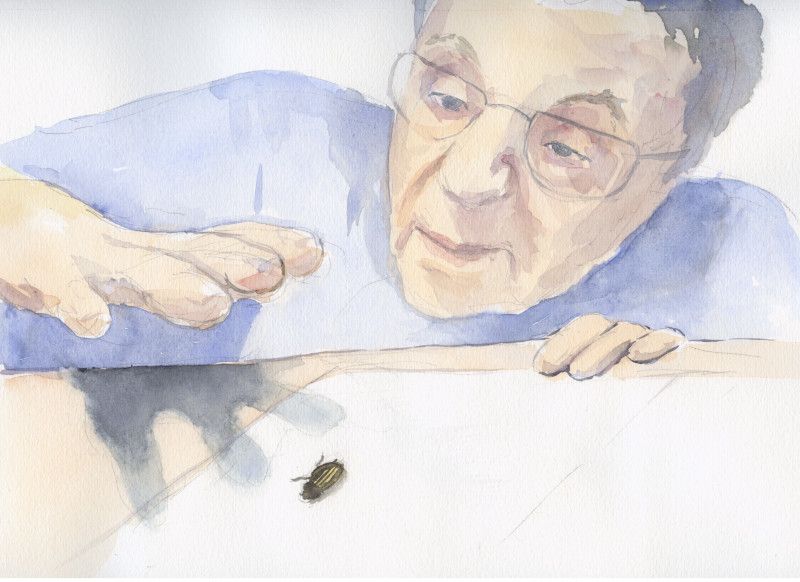
Wow ... it wasn't a mosquito
The ants quickly became interested, touched it with their antennae and their jaws.
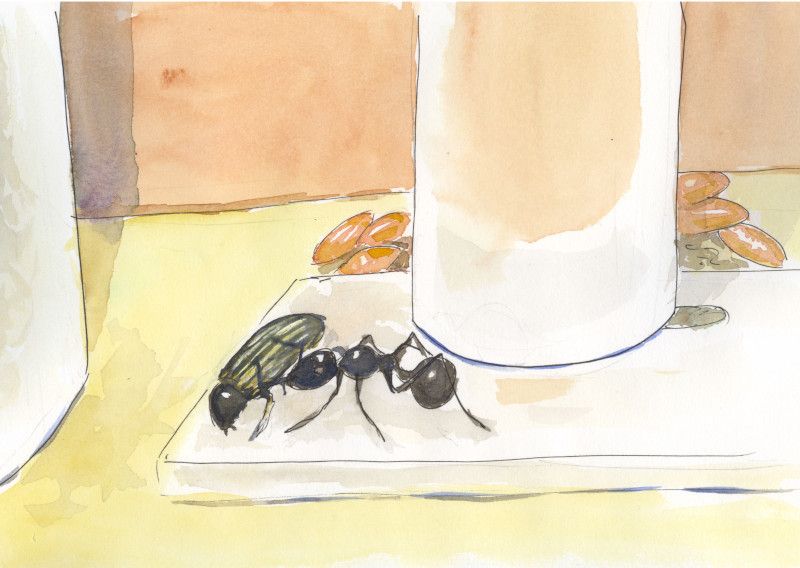
This is interesting: it seems that the ant was saying
It seemed that there was some doubt, two ants discussed the subject touching each other with their antennae, which is the way ants speak.
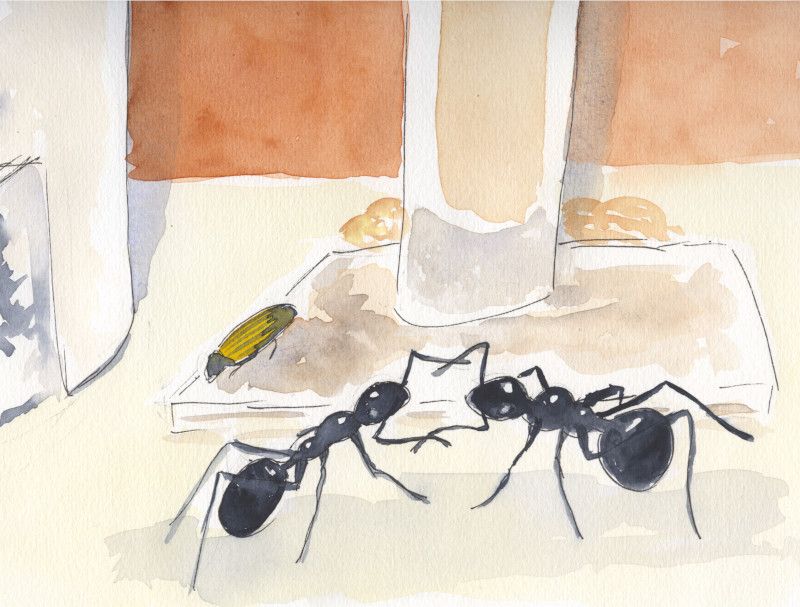
Arguing about the beetle
In the end the ant made up its mind and entered the nest castle with the beetle.
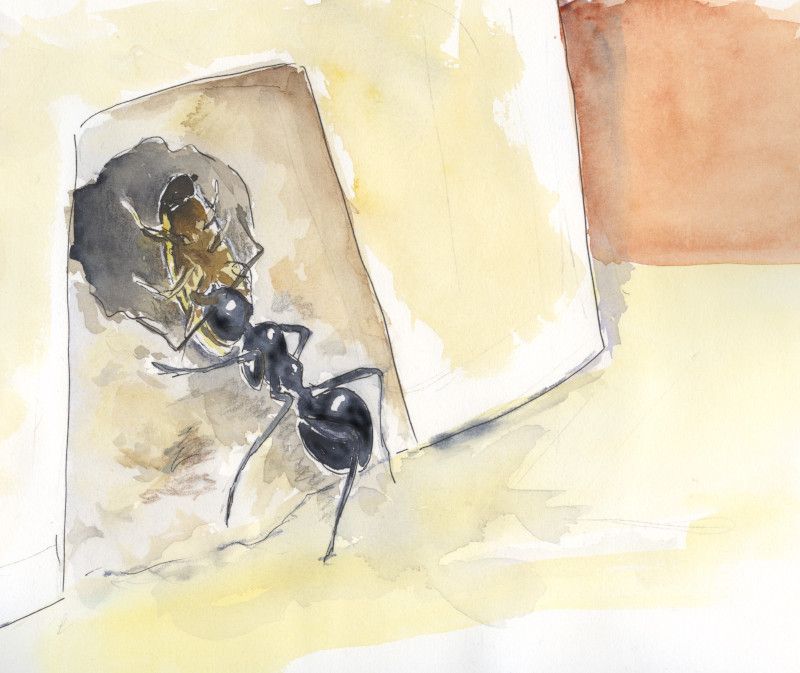
I'm going to show this to mama the queen
The ant soon came out of the castle-nest with the beetle in its mouth. It seemed strange to me that they despised it as food, would the queen be allergic to beetles?
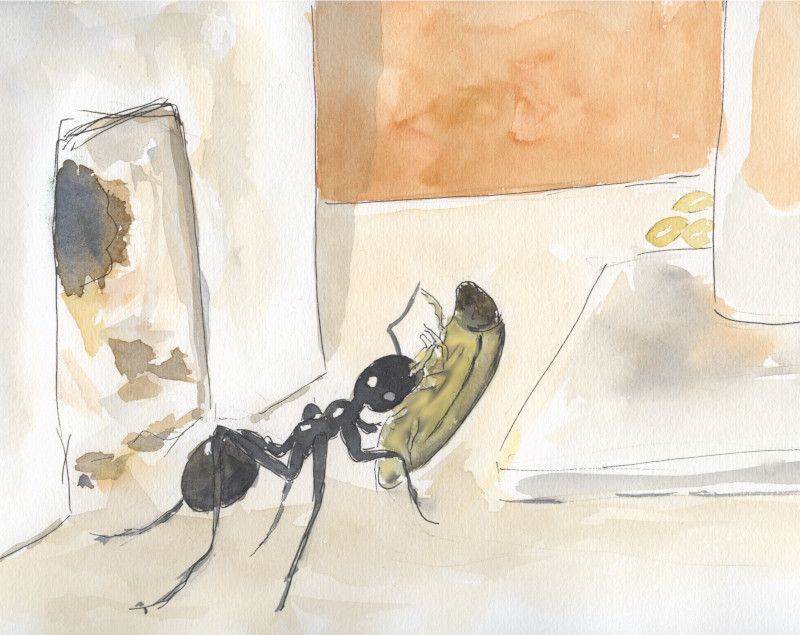
It seems that the beetle has not been approved as a food
The beetle was lying on the plastic platform that supports the water tube. From time to time an ant passed by and seemed to play with its wings, because it did not tear them off.
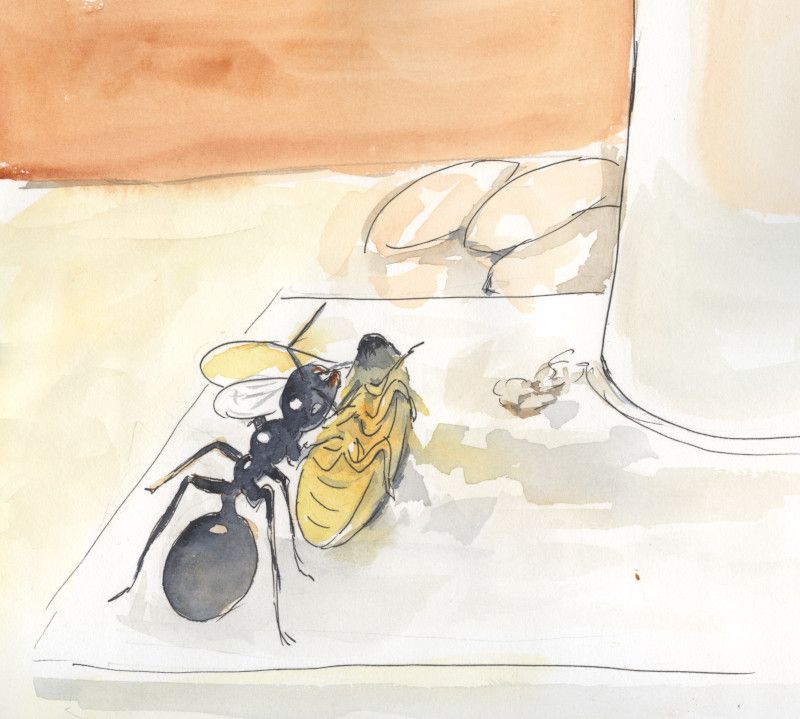
These wings look fun
In the position you see, the beetle spent the first night in the anthill, while the ants drank water nearby. Some ant had put a birdseed very close to the beetle, possibly by chance, but my head was seeing a wake.
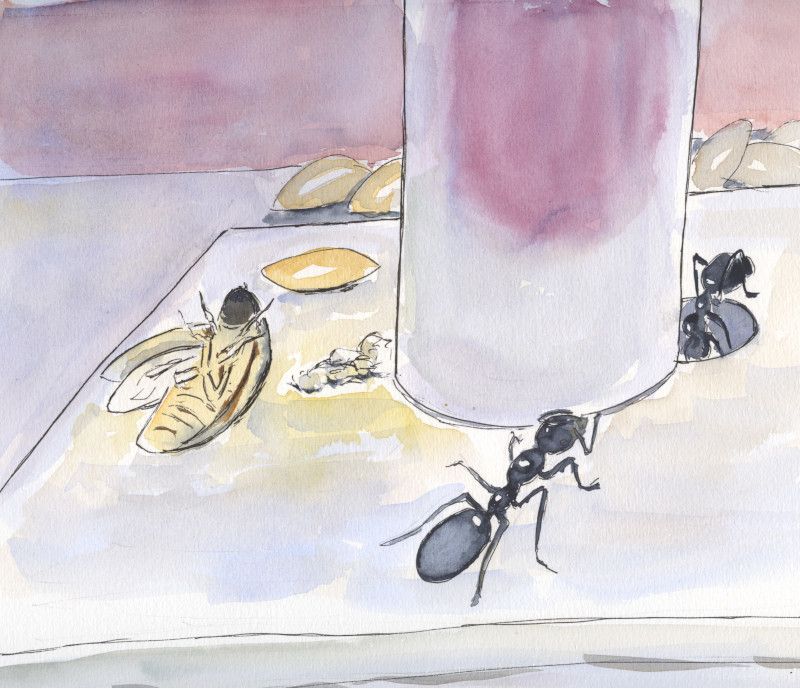
The wake?
The ants placed the dead beetle in a corner behind the water tube, where they had put birdseed seeds, possibly as a reserve. From time to time the ants that passed by liked to play with its wings and moved it slightly. He was in that place for a week.
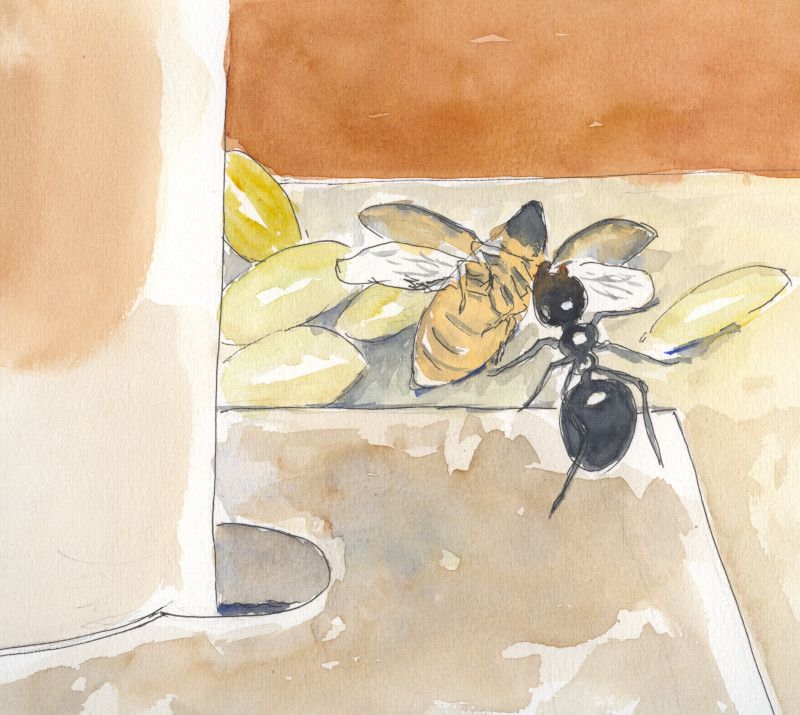
Stay of the beetle in the seed store
Before continuing with the story, I wanted to tell you that some species of small beetles live inside the nest of ants.
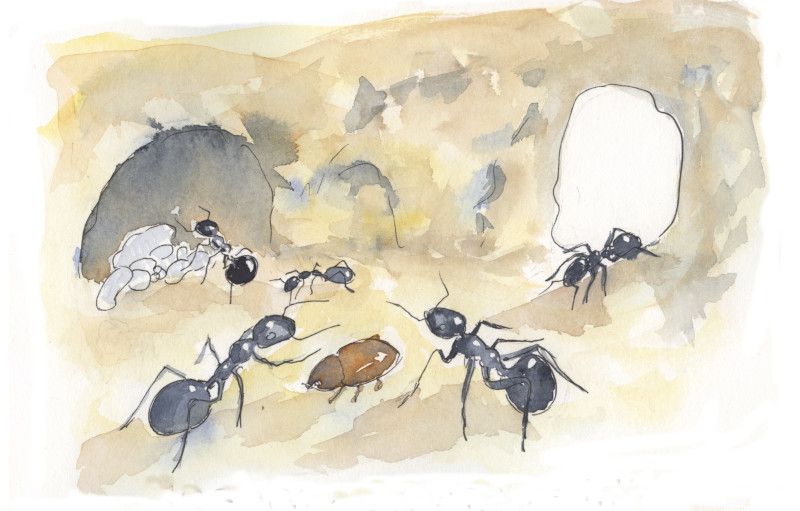
El escarabajo mirmecófilo
The ants have a relationship with these beetles similar to ours with dogs and cats, they even feed them mouth to mouth as they do with other ants. They are called myrmecophilic (ant-loving) beetles .
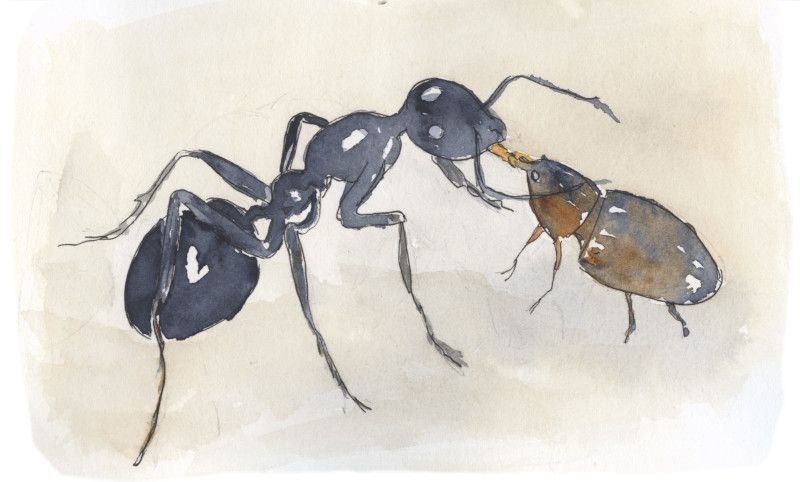
Feeding an adopted beetle
I'm sorry I didn't take a photo of the beetle in my story to see if it belonged to any of those species.
One day I was surprised to see one of the ants that had put the beetle in the water hole and seemed to be washing it.
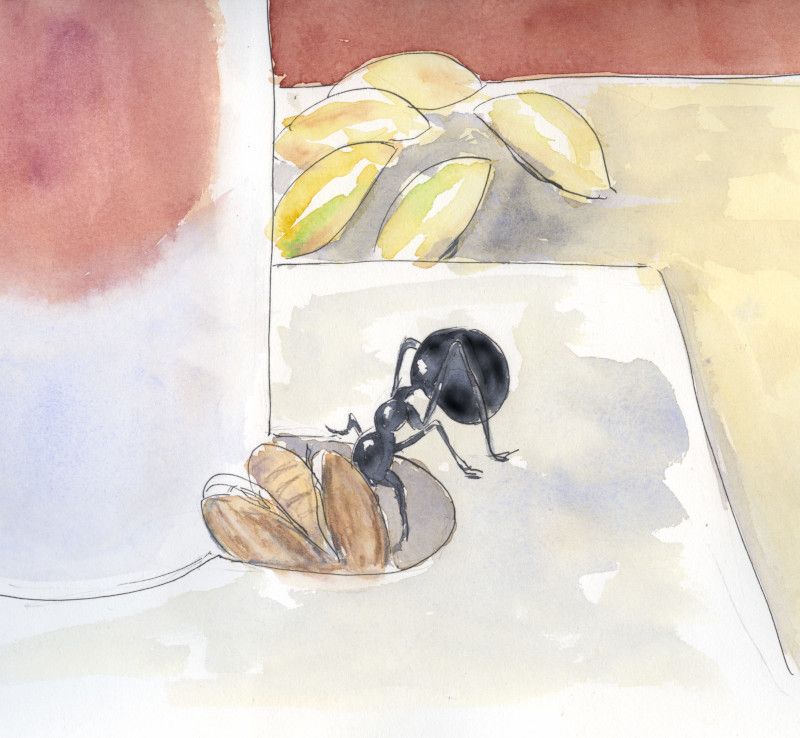
Is she washing the beetle?
But my surprise turned to anguish when I saw next that the ant was reintroducing the beetle into the castle-nest.
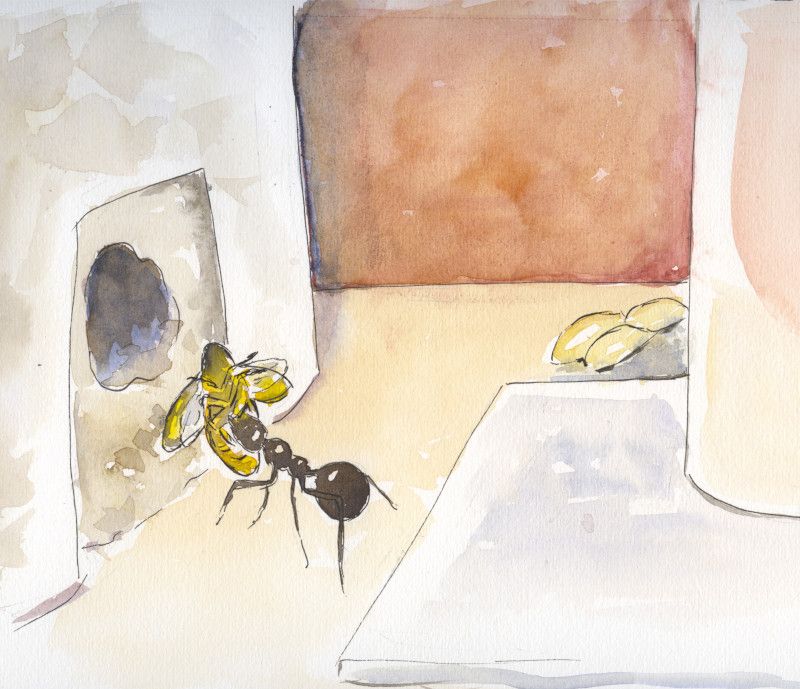
Have they finally decided to eat the beetle? ?
Am I giving my ants little protein? Are the larvae crying with hunger? It has to be something dramatic for that ant to decide to eat a beetle that has been dead for six days. I ran to the kitchen to get a piece of squid out of the freezer to feed the ants.
I put the piece of squid to the ants, and while they were eating it I realized that the beetle was outside the castle-nest, very close to the entrance.
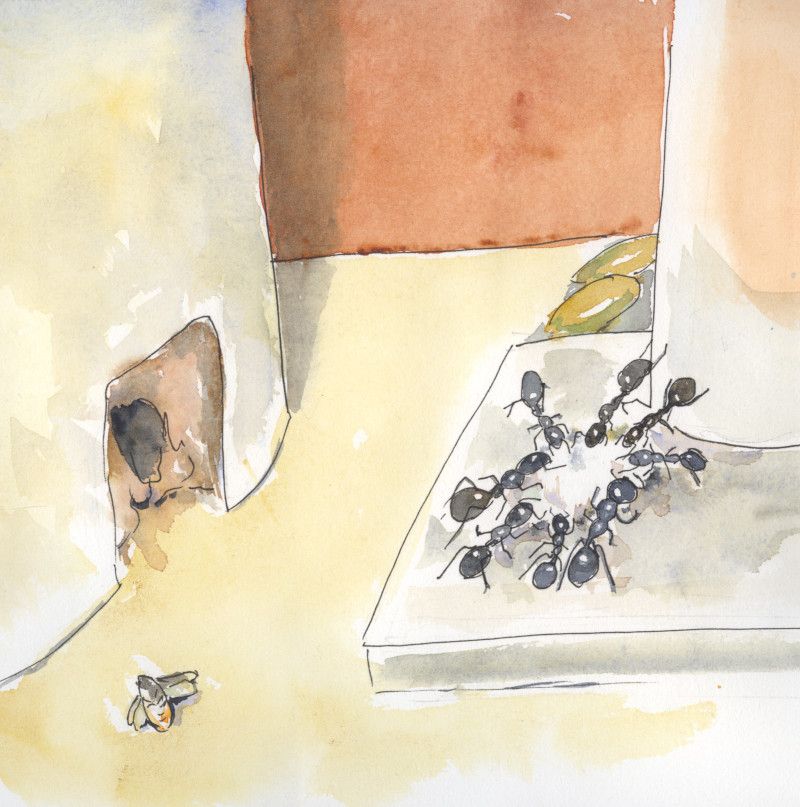
They have taken the beetle out of the nest again, maybe it was a good idea to give them a piece of squid
A day later I saw the beetle on the mountainside.
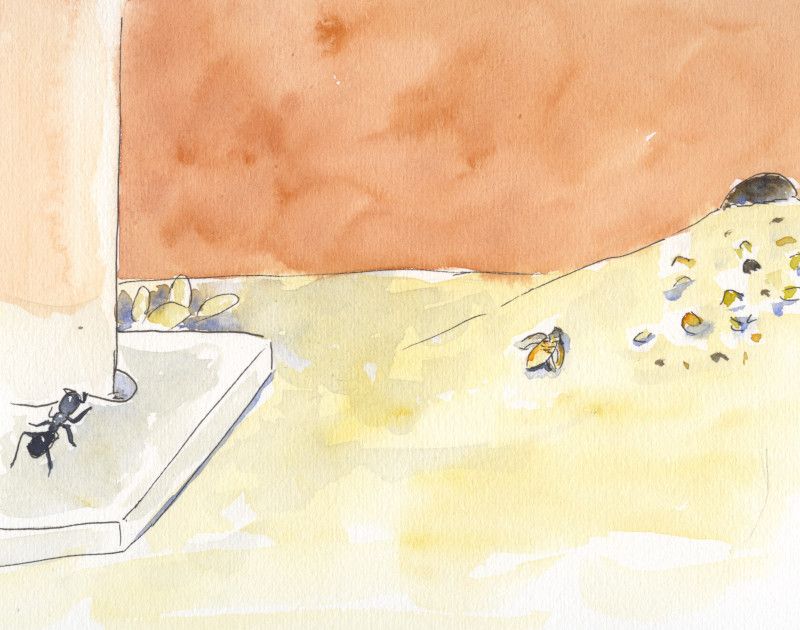
The beetle on the road to the cemetery
Three days had passed since the beetle's bath when I saw it perched at the bottom of the duct that communicates with the cork anthill. In that conduit the first ant that died after the construction of the castle-nest was buried. In the second chamber from the entrance of the cork anthill the ants had placed the one that died in second place.
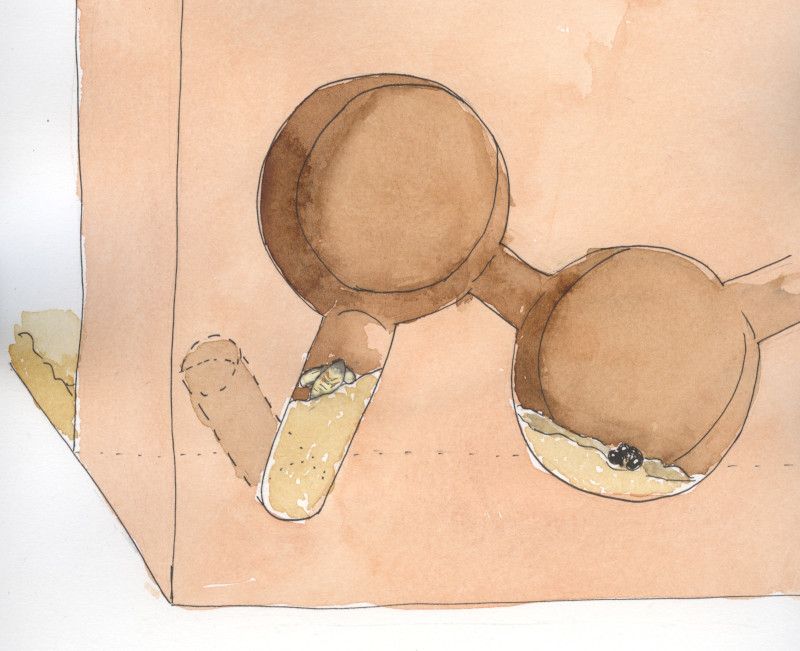
The beetle perched in what was the first cemetery of the anthill
About 20 days later, when I made the following drawing, the beetle kept all the dead ants company until then (4). The cork graveyard chamber, where they had moved all the dead ants, was filled with all kinds of food, seeds, dried squid remains, bits of pate, and many other things besides sand.
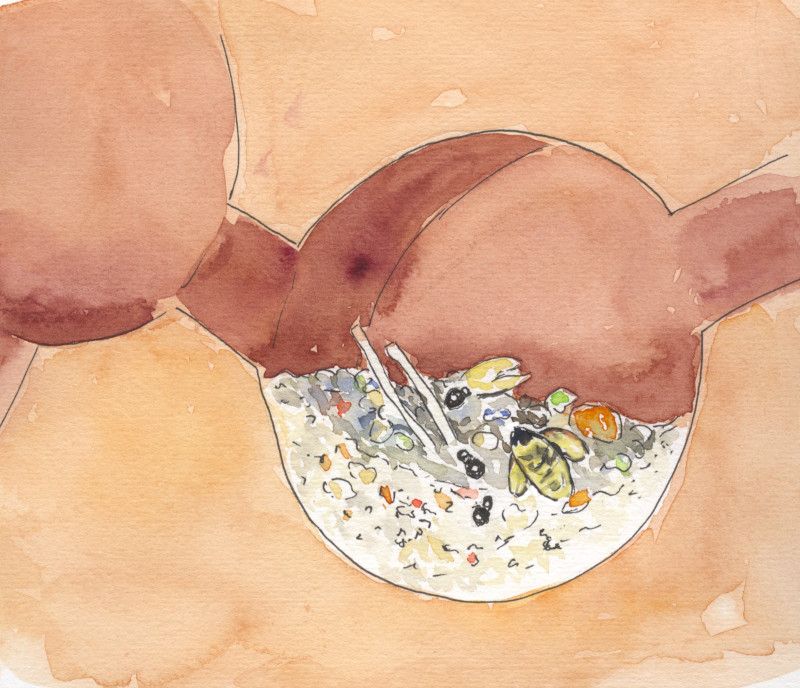
The beetle in which is the current cemetery
EPILOGUE
When I began to review my notebook, I realized that the beetle's bath had been several days after the death of the second ant, and had coincided with the remodeling of the burial chamber.
Going through my journal
The same day that they placed the beetle at the entrance of the cork cemetery, they unearthed the first ant, to later move it to chamber 2, where its sister, who died a little later, was placed. Several ants had to collaborate in the design of that chamber, contributing ideas to make it more comfortable for their dead companions.
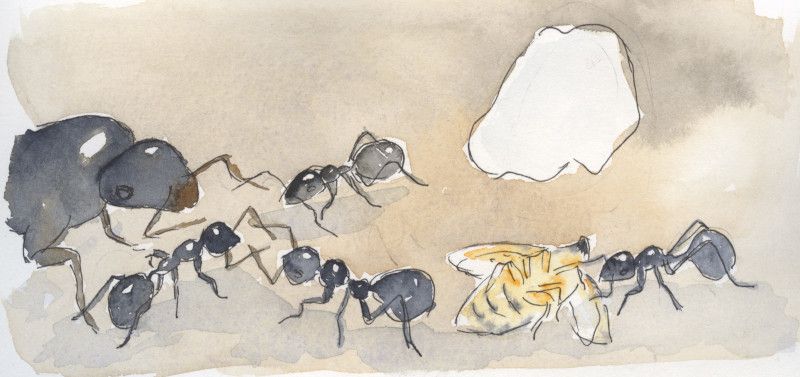
As I imagine, after bathing the beetle, the ant that had the idea of adding that company to the chamber went to communicate it to the rest of the colony. For that reason she put the beetle in the nest.
Making a plan about the fate of the beetle
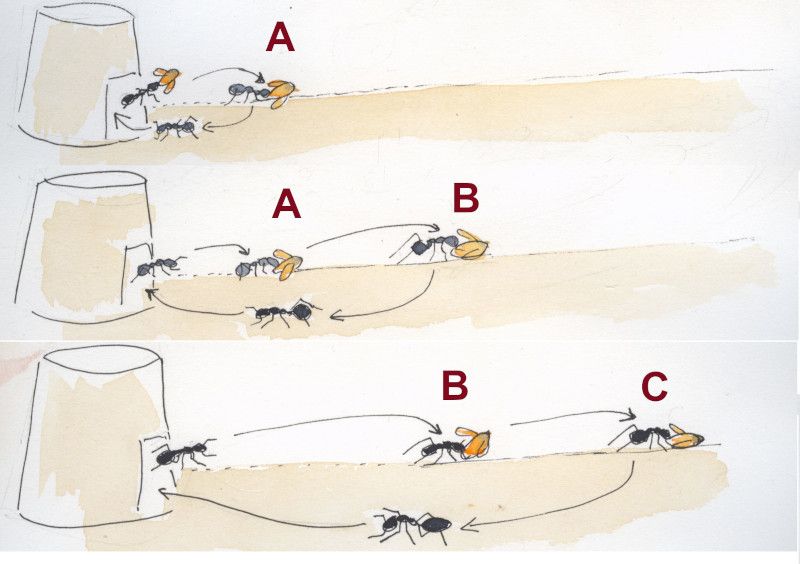
In my opinion the transfer of the beetle in phases would only be explained because different ants do it. For example, an ant moves the beetle from the nest to point A, and returns to the nest, another moves it from point A to B, and a third moves it from B to C. I have observed the same ritual in the transfer of dead ants to the cemetery chamber, it seems that several ants are collaborating in the transfer. If it is the same ant, it must be important that the transfer is not fast and that is why it is done in steps.
Possible phased transfer of the beetle to the cemetery chambers
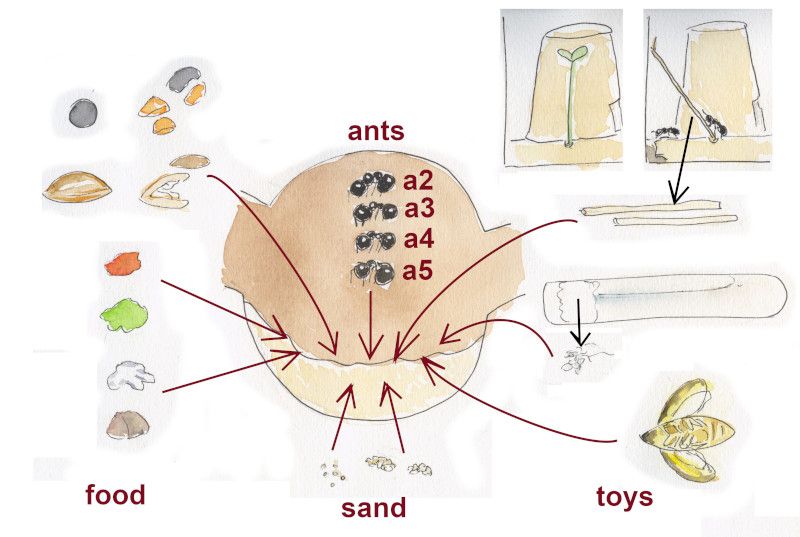
In the cemetery chamber, in addition to the dead ants (four so far), there is food: whole and broken seeds, colored pieces of ant food concentrate, remains of dried squid and pieces of pate; there is also sand: loose sand and sand forming conglomerates as if coming from a humid area (the castle-nest?); I would say other artifacts are toys: some long sticks come from a small dry tree that was a germinated seed on one of the edges of the castle-nest, the ants liked to jump over, the cotton torn from the one that plugs the tube of water, and finally the beetle, company and toy.
Contents of the ant cemetery chamber
Comments powered by CComment